Beyond the Acronym: Why E-E-A-T is Your Core SEO Strategy in 2026
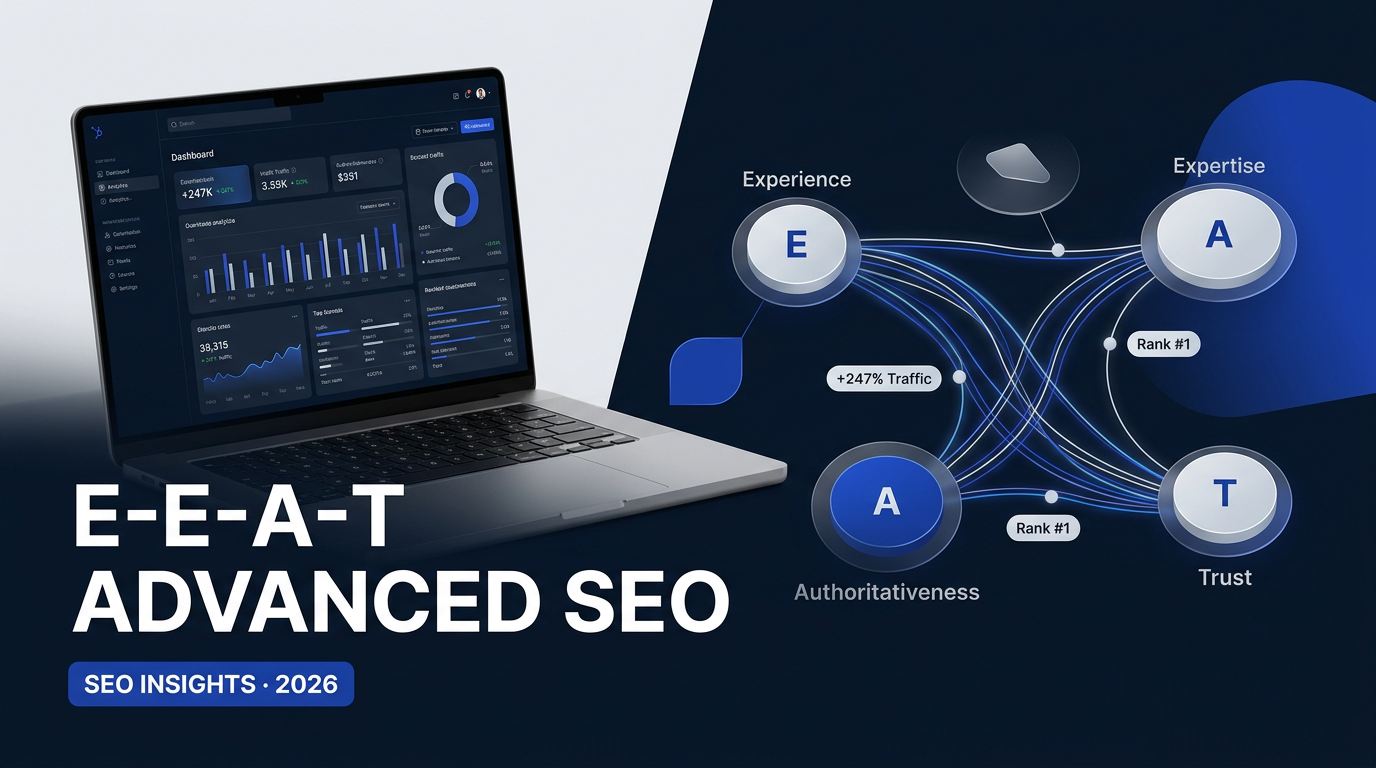
In the ever-shifting landscape of search, chasing algorithms feels like a losing battle. One update can undo months of work. The secret to sustainable growth isn't a new trick; it's a fundamental shift in perspective. For any business serious about digital visibility, mastering E-E-A-T advanced SEO is no longer optional—it's the entire playbook. This framework, standing for Experience, Expertise, Authoritativeness, and Trust, is Google's blueprint for quality, guiding its systems to reward content that genuinely serves users.
While E-E-A-T is not a single, direct ranking factor, Google has been clear that it builds its ranking algorithms to identify signals that align with it. As their own documentation on creating helpful content states, the goal is to reward "people-first" content. In 2026, with the rise of AI Overviews and increasingly sophisticated user expectations, demonstrating E-E-A-T is how you move from just ranking to becoming the definitive answer in your niche. It’s about building a brand that both algorithms and humans implicitly trust.
Advanced Tactics for Demonstrating Experience (The First 'E')
The addition of 'Experience' was a game-changer, signaling that first-hand, real-world use is highly valued. Basic approaches involve saying you've used a product. Advanced strategies involve proving it at scale and making that proof a core part of your content. It’s about showing, not just telling.
Instead of a simple sentence, integrate tangible proof of experience directly into your content. This builds immediate credibility and provides unique value that competitors can't easily replicate. Think about how you can turn experience from a claim into a feature.
- “Tested By” Data Boxes: For product reviews or comparisons, create standardized boxes that detail how you tested. Include fields like “Testing Period,” “Methodology,” and “Key Finding.” This structured data is not only great for users but can also be marked up with schema.
- Integrate Authentic User-Generated Content (UGC): Embed social media posts from real customers using your product. Create case studies that go beyond a simple quote, detailing the user's journey, challenges, and results with your solution. This borrows their first-hand experience.
- Video and Multimedia Proof: Create video content showing the product in use, a service being performed, or a walkthrough of a process. Short, unpolished videos can often feel more authentic than slick productions. A screen recording of you using a software is more powerful than a list of its features.
- Author Experience Callouts: If the author has unique personal experience (e.g., “As a certified financial planner with 15 years of experience...”), feature this in a distinct callout box within the article, not just in their bio at the bottom.
Scaling Expertise: From Author Bio to Knowledge Graph
Expertise is about demonstrating a high level of skill or knowledge in a field. A simple author bio is table stakes. In 2026, advanced SEO means turning your authors and your brand into recognized entities that Google's Knowledge Graph can understand and connect. This moves your expertise from a simple string of text on a page to a verifiable concept within Google's universe.
The goal is to build a web of interconnected signals that all point to the same conclusion: this person or brand is an expert on this topic. This requires a concerted effort both on-page and across the web.
- Create Robust Author Entity Pages: Every author should have a dedicated page on your site. This page is not just a bio; it’s a hub. It should include their credentials, education, awards, links to their verified social media profiles (LinkedIn, X/Twitter), and a full list of all content they’ve published on your site and elsewhere.
- Leverage `SameAs` Schema: Use `Person` schema on author pages and `Article` schema on their posts. The crucial property is `sameAs`, which allows you to explicitly tell Google that the author's page on your site is the same entity as their LinkedIn profile, their personal website, and their profile on other authoritative publications.
- Build Topical Authority: True expertise isn’t demonstrated in a single article. It's shown by covering a topic comprehensively. Develop topic clusters where a central pillar page links out to dozens of detailed articles covering every conceivable sub-topic. This signals deep, focused knowledge.
- Go Beyond Your Blog: Encourage your experts to participate in industry podcasts, webinars, and expert roundups on other respected sites. Each external appearance is another data point that validates their expertise.
Building Authoritativeness That Machines and Humans Recognize
While Expertise is about knowledge, Authoritativeness is about reputation. It’s the recognition of that expertise by others in your industry. If you are an expert, others will cite you, link to you, and mention you. Advanced SEO here is less about chasing random backlinks and more about strategic Digital PR that builds a powerful, topically relevant link graph.
Your authority is measured by the company you keep online. Being cited by a top-tier university or a leading industry journal is infinitely more valuable than hundreds of low-quality links. As the experts at Semrush note, these quality signals are what help you perform well.
- Create “Linkable Assets” with Original Research: Instead of just writing blog posts, invest in creating assets that others in your industry will want to cite. This includes conducting original surveys, analyzing proprietary data, or creating a comprehensive statistical report.
- Targeted Digital PR: Identify the key journalists, academics, and publications in your niche. Build relationships and pitch them your original research or expert commentary. The goal is to get your brand and experts mentioned as sources in authoritative content.
- Contribute to Reputable Publications: Getting your experts published on high-authority, industry-specific sites (not generic guest post farms) builds their individual authority and, by extension, your brand's authority.
- Secure Speaking Engagements & Awards: Being a speaker at a known industry conference or winning a recognized award are powerful real-world signals of authority that can be showcased on your site.
Engineering Trust (The 'T' at the Core): The Ultimate Conversion Factor
Trust is the centerpiece of E-E-A-T. All other elements feed into it. A user must trust your site to provide their personal information, make a purchase, or act on your advice. For Your Money or Your Life (YMYL) topics, this is non-negotiable. Trust is built through transparency, security, and consistency.
Google’s guidance encourages us to ask “Who, How, and Why” about our content. This level of transparency is key to building trust. You need to make it incredibly easy for a user to understand who is behind the website and why they should be trusted.
- Make “About Us” a Priority: Your About Us page should be one of your most detailed. Include your company's mission, history, and physical address. Feature real photos and bios of your leadership team and key staff members.
- Publish Your Policies: Create dedicated, easily accessible pages for your editorial standards, fact-checking process, privacy policy, and terms of service. For e-commerce, this includes crystal-clear shipping and return policies.
- Showcase Social Proof and Credentials: Prominently display customer reviews (and mark them up with `Review` schema), testimonials, trust badges (like BBB), security seals (McAfee, Norton), and any professional certifications or accreditations your business holds.
- Ensure Technical Trust: Trust is also technical. Your site must be secure with HTTPS. Your user data must be handled responsibly. Page experience signals, like fast loading times and no intrusive interstitials, also contribute to a trustworthy user experience.
The Future: E-E-A-T in an AI-Driven Search World
Looking ahead to 2026 and beyond, E-E-A-T is your best defense and offense for the age of AI search. AI Overviews and other generative AI features synthesize information from multiple sources to provide a single answer. The sources they choose will be the ones they deem most credible and trustworthy.
Your E-E-A-T signals are training data for these models. A strong E-E-A-T profile makes your content more likely to be selected as a canonical source for AI-generated answers, giving you visibility in this new format.
- Structure Data for Machines: Go all-in on structured data. Use `Organization` schema for your brand, `Person` for your authors, `Product` for your items, and `HowTo` or `FAQPage` for your informational content. This makes your E-E-A-T signals machine-readable.
- Answer Engine Optimization (AEO): Structure your content to directly answer user questions. Use clear headings, lists, and concise language. This makes your content easy for AI to parse and use in a synthesized answer.
- Embrace Transparency about AI Use: If you use AI to assist in content creation, be transparent about it. Following Google's recommendation to explain “How” content was created builds trust. An expert-reviewed, AI-assisted article is far better than a purely AI-generated one with no oversight.
Key Takeaways
- E-E-A-T is Foundational: Stop treating E-E-A-T as a checklist. It's the strategic framework for creating a brand and website that is built to last in modern search.
- Prove, Don't Just Claim: The core of advanced E-E-A-T is providing tangible, verifiable proof of your experience, expertise, and authority.
- Build Entities, Not Just Pages: Focus on establishing your authors and brand as recognized entities in Google’s Knowledge Graph through schema and off-site efforts.
- Trust is the Core: Every action, from your About Us page to your site's security, should be geared toward building and maintaining user trust.
- Future-Proof with E-E-A-T: Strong E-E-A-T signals are your best bet for visibility in an increasingly AI-driven search environment.