The Elephant in the Room: Did Google Kill FAQ Schema?
Let's clear the air. You’ve probably heard the rumors or seen the chatter: Google pulled the plug on the widespread FAQ rich result in search. For years, we chased those handy little dropdowns under our search listings. They were a fantastic way to dominate SERP real estate and boost click-through rates. Now, for most sites, they’re gone. In fact, if you look at Google's own developer updates, they officially removed the documentation for the FAQ rich result feature in mid-2026, confirming the shift.
This has led many businesses to ask: Is implementing FAQ schema markup a waste of time now? The answer is an emphatic no. While the direct visual reward in the SERP has changed, the underlying strategic value of structured data has skyrocketed. Thinking of schema only in terms of rich snippets is a 2023 mindset. In 2026, it’s about structuring your data for a much more important audience: artificial intelligence.
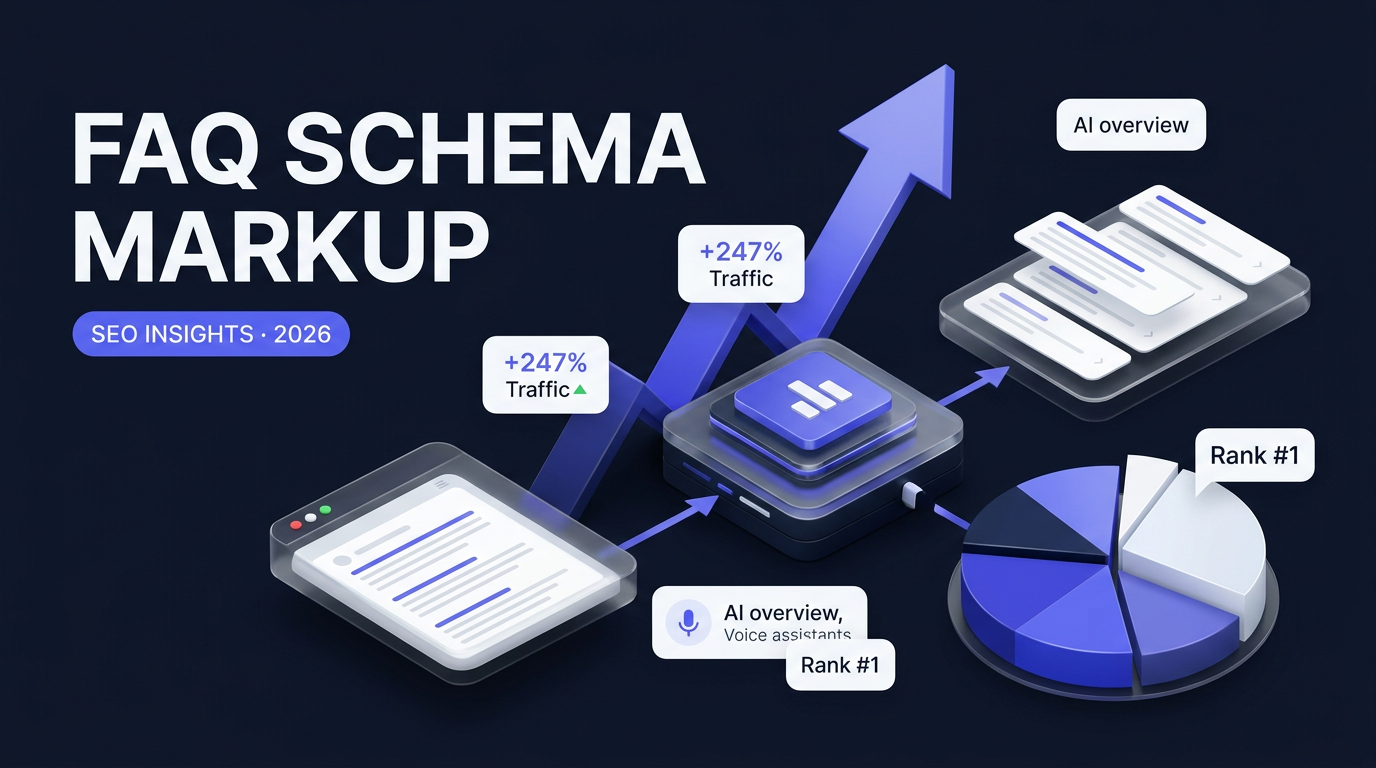
This shift requires a new perspective. Instead of just chasing visual snippets, we are now focused on building a machine-readable foundation for our content. This ensures our information is clearly understood, trusted, and utilized by the next generation of search, including AI Overviews and voice assistants. The game hasn't ended; the rules have just evolved.
Beyond Rich Snippets: Why Schema Is Now an AI-Readiness Signal
The disappearance of most FAQ rich results wasn't about punishing schema users. It was about cleaning up the search results page and shifting focus to a more integrated AI-driven experience. This is where your structured data strategy becomes more critical than ever. Google's AI Overviews, the summarized answers that appear at the top of many search results, are powered by AI models that need to understand content at a granular level. FAQ and How-To schema are purpose-built for this.
By marking up your content with FAQ schema, you are essentially pre-digesting your information for AI. You are explicitly stating, “Here is a specific question, and here is the direct, authoritative answer.” This clarity makes your content an ideal source for inclusion in AI-generated summaries. It removes ambiguity and positions your brand as a definitive source of information, which can help you get cited in AI Overviews and even influence how your site is perceived through features like Preferred Sources in AI Mode.
Think of it as the ultimate form of semantic SEO. You're not just hoping Google understands your page; you're handing it a blueprint. Key benefits in the AI era include:
- Improved Eligibility for AI Overviews: Cleanly structured Q&As are perfect fodder for AI-generated summaries.
- Enhanced Voice Search Performance: Voice assistants like Google Assistant rely on structured data to pull direct answers to user queries.
- Future-Proofing Your Content: As search becomes more conversational and answer-driven, structured data ensures your content remains compatible and competitive.
- Building Topical Authority: Consistently providing clear, structured answers helps search engines recognize your expertise on a subject, which is a foundational ranking factor.
How-To Schema: The Unsung Hero for Actionable Content
While the visual fate of FAQ schema has been a hot topic, its cousin, How-To schema, remains a powerful tool for earning a rich result. If your content provides step-by-step instructions on how to accomplish a task—from “How to change a tire” to “How to set up a marketing budget”—How-To schema is a must-use.
Unlike FAQ schema, which is for a list of questions and answers, How-To schema is designed for sequential processes. When implemented correctly, it can make your page eligible for a rich result that displays a preview of your steps directly in the SERP. This can include text, images, and even video clips for each step, creating a highly engaging and visually dominant search listing.
When should you use one over the other?
- Use FAQ Schema when: Your page answers several common questions on a specific topic. This is perfect for service pages, product pages, and blog posts that have a dedicated Q&A section. The questions do not need to be in any particular order.
- Use How-To Schema when: Your page outlines a clear, sequential process to achieve a specific goal. The steps must be followed in order to complete the task. Examples include recipes, tutorials, and installation guides.
For many businesses, the best strategy involves using both. A blog post tutorial could use How-To schema for the main process and then use FAQ schema for a concluding section that addresses common problems or related questions about the process.
A Practical Guide to Implementing Schema in 2026
Getting started with schema isn't as daunting as it sounds. With modern tools, you don't need to be a coding expert to implement it effectively. The most common and recommended format is JSON-LD, a script that you can place in the `
` or `` of your HTML without altering your existing content's display.Here is a simple, four-step process to get started:
- Identify and Optimize Your Content: First, find the right pages. Look for blog posts, service pages, or product pages with existing Q&A sections or step-by-step guides. Ensure the content is high-quality, user-focused, and provides clear, concise answers or steps. Do not hide the questions and answers in an accordion just for schema; the content must be visible to the user on the page.
- Generate the JSON-LD Markup: Use a free online tool like Merkle's Schema Markup Generator or the many available WordPress plugins (like Rank Math or Yoast SEO). These tools provide a simple interface where you can copy and paste your questions and answers (for FAQ) or steps (for How-To), and they will generate the necessary code for you.
- Insert the Code on Your Page: Copy the generated JSON-LD script. If you're using a modern CMS like WordPress, your SEO plugin may have a dedicated field to paste this code. Otherwise, you can work with your developer to add it to the HTML of the specific page, preferably within the `` section.
- Test and Validate: This step is non-negotiable. Once the code is live, take the page URL and paste it into Google's Rich Results Test tool. This will tell you if Google can read your structured data correctly and whether the page is eligible for any rich features. It will also flag any errors or warnings that need to be fixed.
Advanced Strategy: Nesting Schema for Maximum Semantic Impact
For those ready to move beyond the basics, the real power of schema lies in nesting different types together. This practice involves placing one schema type inside another to provide search engines with a much richer, more interconnected understanding of your content. Instead of just having a standalone FAQ page, you can tell Google that this is an Article about a specific topic, written by a certain Author, and it also happens to contain a set of FAQs.
A common and powerful combination is nesting `FAQPage` schema within an `Article` or `BlogPosting` schema. This communicates a complete picture: it's not just a random list of questions, but a Q&A section that is part of a larger, authoritative piece of content. Similarly, you can nest `FAQPage` schema within a `Product` schema on an e-commerce page to answer common questions about that specific product.
Why does this matter for 2026?
As search engines build their Knowledge Graphs and AI models, they are looking for entities, not just keywords. A well-structured, nested schema turns your page from a flat document into a rich data entity with clearly defined properties and relationships. This helps in:
- Disambiguation: It helps Google understand the exact subject of your page and differentiate it from similar topics.
- Building Connections: It allows search engines to see how different pieces of information on your site (products, articles, authors, FAQs) are related.
- Strengthening Authority Signals: A comprehensive data structure signals a high level of organization and detail, which are hallmarks of high-quality, expert content that historically correlates with higher rankings and user trust.
By creating these detailed data blueprints, you are directly feeding the systems that will power search results for years to come. You are making your content not just discoverable, but truly understandable at a machine level.
Key Takeaways
Navigating the SEO landscape in 2026 requires adapting to the rise of AI. While some old tactics have faded, the principles of structured data are more important than ever. Here’s what you need to remember:
- FAQ Rich Results Are Mostly Gone: Don't implement FAQ schema expecting the old visual dropdowns in the SERP. The visual benefit is no longer the primary goal.
- Schema Is for AI Now: The main purpose of FAQ schema markup is to make your content machine-readable, feeding AI Overviews, voice search, and other AI-driven features.
- How-To Schema Still Delivers Rich Results: For content that outlines a process, How-To schema is a powerful way to earn a visually dominant spot in search results.
- Implementation is Accessible: Use generators and plugins to create JSON-LD code. Always validate your implementation with Google's Rich Results Test.
- Nest Schema for a Competitive Edge: Combine schema types like `FAQPage` within `Article` or `Product` to build rich data entities and strengthen your semantic authority.