
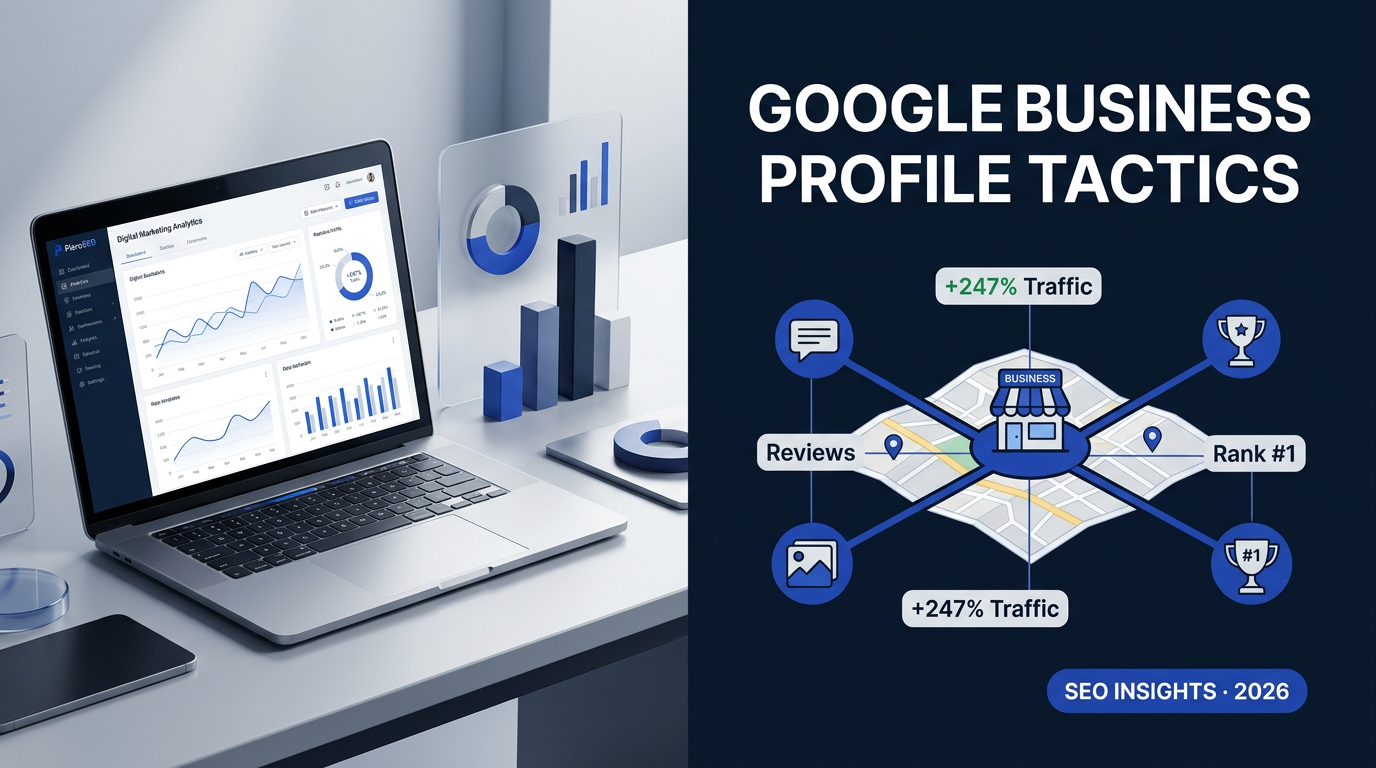
Dominate Local Search: Essential Google Business Profile Tactics for Small Businesses
Is your small business a hidden gem? In today's digital world, that's not a compliment—it's a crisis. If local customers can't find you when they search "plumber near me" or "best coffee shop downtown," you might as well be invisible. For years, the answer has been Google Business Profile (GBP), but simply having a profile is no longer enough. As we head into 2026, the competition is fiercer, and Google's algorithm is smarter. To truly dominate local search, you need to deploy advanced Google Business Profile tactics that go far beyond the basics.
Think of your GBP as more than a digital business card; see it as your most powerful local marketing platform. It's a dynamic hub for customer interaction, a showcase for your services, and a direct line of communication with Google itself. Sticking to the setup-and-forget-it approach of the past means you're leaving money on the table for your competitors to scoop up. This guide will walk you through the expert-level strategies you need to not just compete, but win in your local market.
Beyond the Basics: Foundational Excellence for 2026
Before diving into advanced tactics, your foundation must be flawless. Google's official advice emphasizes that businesses with complete and accurate info are more likely to rank well in local search. This is the absolute bare minimum. In 2026, this means every single applicable field in your profile is filled out with meticulous, keyword-conscious detail. Your primary category should be the single best descriptor of your business (e.g., "Plumber," not "Home Services"), while your secondary categories should cover every other relevant service you provide (e.g., "Drain Cleaning Service," "Water Heater Repair Service").
Accuracy extends beyond your address and phone number. It includes precise service areas for businesses that travel to customers, and detailed business hours, including all special hours for holidays and events. An outdated profile signals to Google that your business may be neglected or unreliable. The goal is to build trust with both Google and your potential customers. A complete profile is the first and most critical step in demonstrating your relevance and authority.
To ensure your foundation is rock-solid, perform a comprehensive audit of your profile. Pay close attention to these often-missed details:
- Service Area(s): For service-area businesses (SABs), be specific about the cities, zip codes, or neighborhoods you serve. Don't just pick a massive radius.
- Detailed Hours: Use the "More hours" feature for specific services like senior hours, pickup times, or brunch service.
- From the Business: Write a compelling, keyword-rich business description. Don't just state what you do; explain what makes you different.
- Opening Date: Adding your business's opening date helps establish its history and longevity in the community.
Master Your Messaging with Advanced Attributes and Services
Think of attributes as powerful filters that help customers find exactly what they're looking for. These clickable tags (like "Women-led," "Wheelchair accessible entrance," or "Outdoor seating") are becoming increasingly important ranking factors. As Google aims to provide hyper-specific answers, a profile rich with relevant attributes has a significant advantage. For 2026, anticipate and enable attributes related to sustainability, technology (e.g., "AI-assisted diagnostics"), and service delivery methods ("Virtual consultations available").
Even more crucial is the 'Services' tab. Many businesses add a few high-level services and stop there. This is a massive missed opportunity. You should list every single individual service you offer as a separate item, complete with a detailed description and, if applicable, a price or price range. Each service item is another chance to rank for a specific keyword. A bakery shouldn't just list "Baked Goods"; it should have separate entries for "Custom Wedding Cakes," "Sourdough Bread Loaf," and "Gluten-Free Cupcakes," each with a description rich with relevant terms.
Follow these steps to transform your profile from a simple listing into a detailed service catalog:
- Audit Existing Services: Review what's currently listed. Is it comprehensive? Is it detailed?
- Brainstorm Every Offering: Write down every single product or service you provide, no matter how small. Think from the customer's perspective—what terms would they search for?
- Write Keyword-Rich Descriptions: For each service, write a 1-2 sentence description that naturally includes relevant keywords. For a roofer's "Roof Inspection" service, you might write: "Our comprehensive roof inspection service identifies potential leaks, shingle damage, and structural issues to ensure your home is protected."
- Review and Update Attributes Regularly: Check your profile quarterly to see if Google has added new attributes relevant to your industry and ensure yours are up-to-date.
Fuel the Engine: A Continuous GBP Content Strategy
The most significant shift in successful GBP management is treating it like a social media or content platform. A static profile is a dead profile. Google rewards activity and fresh content because it signals that your business is active and engaged. This means creating a consistent content plan using Google Posts, Photos/Videos, and the Q&A section.
Google Posts are mini-articles or updates that appear on your profile. Use them weekly to announce offers, highlight a new product, share a blog post, or promote an upcoming event. Use compelling images or videos and a clear call-to-action (CTA) in every post. Photos and videos are even more critical. Go beyond basic storefront shots. Upload high-quality videos of your team at work, customer testimonials, product demonstrations, or a virtual tour of your space. The goal is to give searchers an authentic, inside look at your business.
Finally, the Q&A section is your secret weapon. It's often populated by user questions, but you can—and should—proactively populate it yourself. Ask the most common questions you receive from customers and then answer them thoroughly. This controls the narrative, provides immediate value to users, and allows you to target long-tail keywords. As a bonus, well-answered questions can sometimes appear in a featured snippet in search results.
By consistently publishing fresh content, you're not just engaging customers; you're continuously feeding the Google algorithm valuable information about your business's relevance and expertise.
The New Word-of-Mouth: A Proactive Review Strategy
Reviews are a cornerstone of local SEO, directly impacting what Google calls "Prominence." But the strategy for 2026 is about more than just quantity. It's about generating high-quality, descriptive reviews and engaging with them strategically. When you reply to customer reviews, you show prospective customers that you value feedback. The new goal is to respond to all reviews—positive and negative—within 24 hours.
Take your strategy a step further by encouraging customers to leave descriptive feedback. Instead of just saying, "Leave us a review," try a more guided approach: "We'd love to hear your thoughts on our new cold brew coffee! Your feedback on Google helps others discover their new favorite drink." This subtly prompts them to use keywords you want to rank for. For negative reviews, a prompt, professional response that takes the conversation offline is crucial. It can mitigate damage and often demonstrates better customer service than a string of five-star reviews alone.
Here’s how to build a 5-star reputation strategy:
- Create a Shareable Review Link: Make it easy for customers. Create a short link in your GBP dashboard and share it via email, text message, or on receipts.
- Respond to Every Review: Thank positive reviewers and mention the service they enjoyed. Address negative reviewers with empathy and a solution.
- Showcase Positive Reviews: Screenshot great reviews and share them as a Google Post or on your social media channels to amplify their impact.
- Never Buy Reviews: This violates Google's policies and can get your profile suspended. Authenticity is paramount.
Unlocking Performance with GBP Insights and Local Signals
Your Google Business Profile provides a dashboard of valuable data called Insights. Don't just glance at the view count; dig deeper. The most valuable report is the "Performance" section, which shows the actual search queries customers used to find your profile. This is a goldmine of information about customer intent.
Analyze these queries regularly. Are people searching for services you don't have listed on your profile yet? Add them. Are they using different terminology than you are? Adapt your language in your descriptions and Google Posts. This data provides a direct feedback loop, allowing you to refine your Google Business Profile tactics based on real-world user behavior. This practice directly improves your "Relevance," one of the three core pillars of local ranking that Google outlines, alongside Distance and Prominence.
To boost Prominence beyond reviews, you need to think about your digital footprint outside of GBP. This means building local citations—mentions of your business Name, Address, and Phone number (NAP) on other reputable local websites and directories like Yelp, industry-specific sites, and your local chamber of commerce. Consistent NAP information across the web reinforces your location and legitimacy to Google, amplifying the authority of your GBP and helping you stand out as a well-known entity in your area.
Key Takeaways for Local Dominance
Getting ahead in local search requires a proactive, strategic approach. Here are the essential tactics to focus on for 2026:
- Achieve 100% Profile Completion: Fill out every single field, paying special attention to primary/secondary categories and detailed service areas.
- Build a Service Catalog: List every individual service you offer with keyword-rich descriptions to maximize your search visibility.
- Become a Content Publisher: Treat your GBP like a content hub. Post weekly, upload a steady stream of photos and videos, and proactively manage your Q&A section.
- Implement a Proactive Review Strategy: Encourage descriptive reviews, respond to all feedback within 24 hours, and leverage positive reviews as marketing assets.
- Use Insights to Refine Your Strategy: Regularly analyze the search queries customers use to find you and adjust your profile content accordingly.
- Boost Prominence Off-Profile: Build consistent local citations across the web to reinforce your business's authority and trustworthiness to Google.