When nearby customers pull out their phones to find an emergency plumber, dental clinic, or boutique bakery, they rarely scroll past the top three map listings. Mastering local seo for small business is no longer just an optional digital marketing perk—it is the lifeblood of physical foot traffic, incoming phone inquiries, and local revenue.
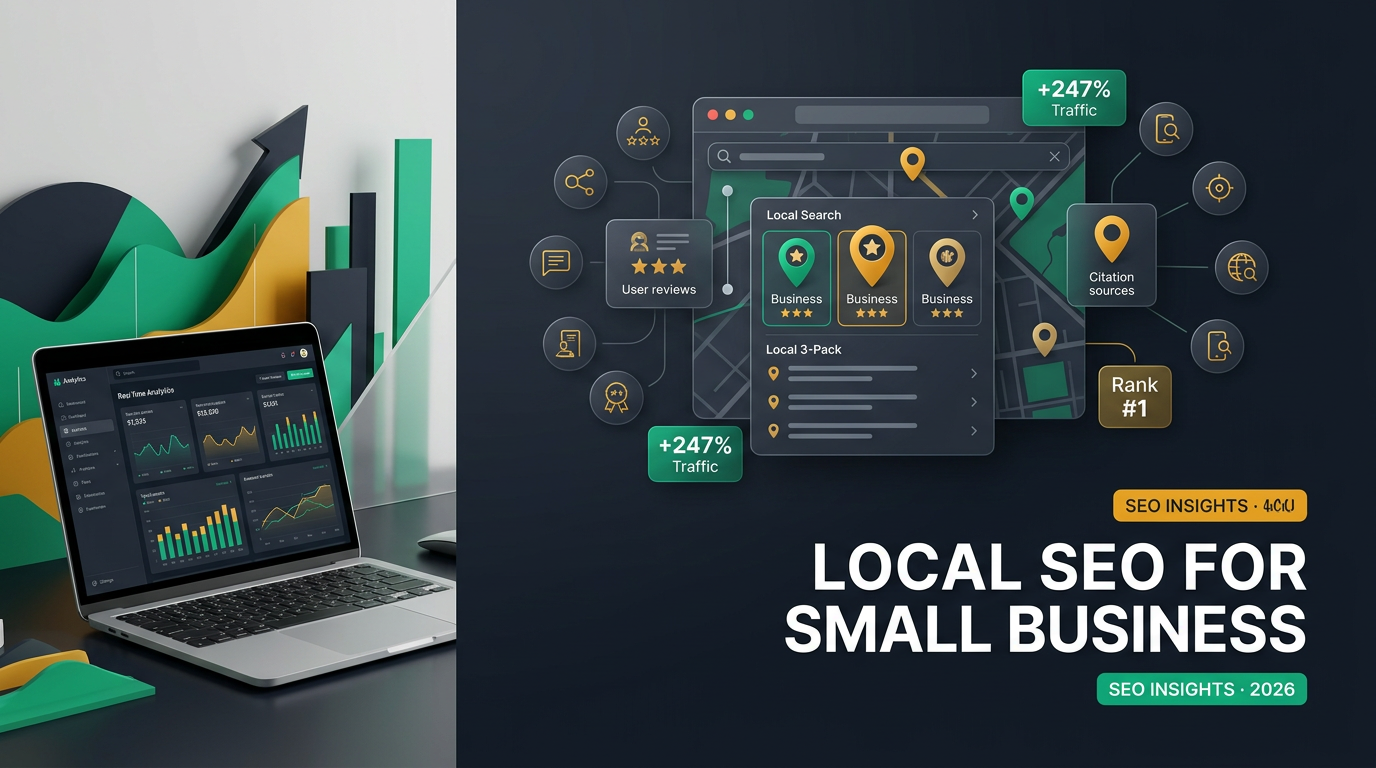
Securing a spot in Google's coveted Local 3-Pack (the trio of map-based results pinned at the top of local search queries) provides unbeatable visibility. In this practical guide, we break down the exact ranking factors, tactical optimizations, and 2026 local search nuances your business must execute to outperform local competitors and capture high-intent buyers.
The Anatomy of the Local 3-Pack: How Google Decides Who Wins
The Local 3-Pack operates under a distinct algorithm separate from standard blue-link organic search. While traditional search focuses heavily on site architecture and global backlink authority, local algorithms evaluate three core pillars: relevance, distance, and prominence.
Relevance determines how closely a business profile matches the user's intent. Distance calculates how far the user is from the physical premises or designated service area. Prominence reflects how well-known and reputable the business is based on customer reviews, local backlinks, brand citations, and organic search performance. As outlined in Ahrefs' Guide to Local SEO, local search split-tests demonstrate that nearly a third of all mobile queries carry explicit local intent, making these three signals critical to revenue generation.
- Relevance: Precise business categorizations, comprehensive service menus, and synchronized metadata across profiles.
- Distance: Proximity signals between the searcher's GPS coordinates and your verified business address.
- Prominence: Review sentiment, citation consistency, directory authority, and regular behavioral interactions (calls, website clicks, direction requests).
Step 1: Complete and Calibrate Your Google Business Profile
Your Google Business Profile (GBP)—formerly Google My Business—serves as the anchor for the Local 3-Pack. Simply claiming your profile is not enough. You must actively optimize every field to send direct algorithmic signals to Google's ranking engine.
Begin with your Primary Category. This single setting carries immense weight in determining the queries for which your profile displays. Be specific: choose "Commercial Real Estate Agency" rather than simply "Real Estate Agency" if that defines your core revenue driver. Then, select up to nine secondary categories that accurately reflect supplementary services you provide.
- Exact Business Name: Avoid spamming keywords into your official business name. Google continuously penalizes profiles using unverified descriptive titles that deviate from their legal branding.
- Detailed Service Menus: Populate every individual service and product item with descriptions, pricing estimates, and associated target search phrases.
- Attributes and Working Hours: Accurately indicate accessibility, accepted payment methods, and special holiday hours to maintain high behavioral engagement scores.
- High-Resolution Visuals: Upload geotagged photos of your interior, exterior, team, and recent projects bi-weekly to boost customer trust and profile dwell time.
Step 2: Establish NAP Consistency and Local Citation Equity
Search engines crawl external web directories to verify your legitimacy. Inconsistencies in your NAP (Name, Address, Phone Number) across the web create entity ambiguity, dampening your prominence score and dropping your ranking outside the 3-Pack.
Focus first on foundational aggregators (Data Axle, Neustar Localeze, and Foursquare) that feed location data across mapping applications, in-car GPS navigation, and mobile directories. Once those are locked down, secure localized and industry-specific profiles.
- Top Horizontal Directories: Yelp, Apple Maps, Bing Places, YellowPages, and the Better Business Bureau (BBB).
- Niche Directories: Avvo for legal professionals, Houzz for home remodelers, TripAdvisor for hospitality, or Healthgrades for medical providers.
- Hyper-Local Outlets: Local Chamber of Commerce rosters, neighborhood business associations, and municipal business directories.
Pro Tip: Never use tracking phone numbers on third-party citations if they fail to display your canonical local area code. Maintain 100% uniformity down to suite numbers and street abbreviations.
Step 3: Engineer a Sustainable Customer Review Engine
Reviews represent both an algorithmic ranking signal and your primary conversion catalyst. Modern local search factors evaluate review velocity (how frequently you collect reviews), review diversity, aggregate star rating, and the specific keywords reviewers naturally include in their feedback.
Businesses that passively hope for reviews fall behind competitors with automated review pipelines. Integrate review requests seamlessly into your post-purchase workflows via SMS or automated emails immediately following service completion.
- Direct Review Links: Generate a short GBP review link directly inside your dashboard and convert it into a scannable QR code on physical receipts, business cards, or delivery boxes.
- Review Keyword Priming: Prompt happy clients with targeted questions: "What specific service did our team complete for you in [City]?" This encourages them to naturally include valuable local and service keywords without violating Google policies.
- Public Responses: Respond to 100% of reviews—both positive and negative—within 48 hours. Meaningful owner responses demonstrate active business stewardship to prospective clients and algorithmic evaluators alike.
Step 4: On-Page Optimization and Hyper-Local Content Silos
Your Google Business Profile and your website work synergistically. Google cross-references your profile's listed landing page to confirm your topical authority and geographical relevance.
Ensure your homepage or designated location landing pages feature properly structured LocalBusiness schema markup. This JSON-LD code explicitly defines your operational hours, exact geo-coordinates, accepted payments, and primary telephone number directly to search engine crawlers without ambiguity.
- Localized Title Tags: Format meta titles using targeted frameworks such as [Primary Service] in [City, State] | [Brand Name].
- Dedicated Service-Area Pages: If you operate across multiple adjacent municipalities, create distinct, value-rich landing pages for each city featuring customer testimonials, completed local projects, and custom driving directions. Avoid duplicate "doorway pages" with identical text.
- Embedded Map and Driving Directions: Embed an interactive Google Map pointing to your GBP profile alongside clear directions from recognizable local landmarks.
Step 5: High-Impact Local Link Building and Community Signals
Local link building is not about acquiring thousands of low-grade directory backlinks. Instead, it revolves around cultivating authentic regional relationships that signal deep neighborhood roots.
As discussed in active practitioner communities like Reddit's Digital Marketing forum, small businesses routinely outrank larger regional chains simply by leveraging genuine community relationships that corporate competitors cannot replicate.
- Local Event Sponsorships: Sponsor youth sports teams, charity runs, or cultural festivals in exchange for high-equity backlinks from official
.orgor community event domains. - Local Digital PR: Pitch unique seasonal data, charity drives, or milestones to local journalists and regional news bloggers who regularly seek human-interest stories.
- Vendor and Partner Exchanges: Feature local suppliers or collaborative non-competing businesses on an exclusive "Preferred Partners" resource page on your site and request reciprocal mentions.
Key Takeaways for Dominating the Local 3-Pack
- Treat your Google Business Profile as a dynamic asset: Post weekly updates, upload new imagery, answer customer Q&As, and keep attributes accurate.
- Standardize your NAP footprint: Eliminate duplicate listings and sync data across core data aggregators and niche industry directories.
- Build an unshakeable review engine: Prioritize steady review velocity, high star averages, and personalized responses to all feedback.
- Anchor with technical local on-page SEO: Implement LocalBusiness JSON-LD schema and produce authentic, localized landing pages for every community you serve.
- Win with regional relevance: Outrank massive national brands by cultivating genuine local backlinks through sponsorships, PR, and regional partnerships.