
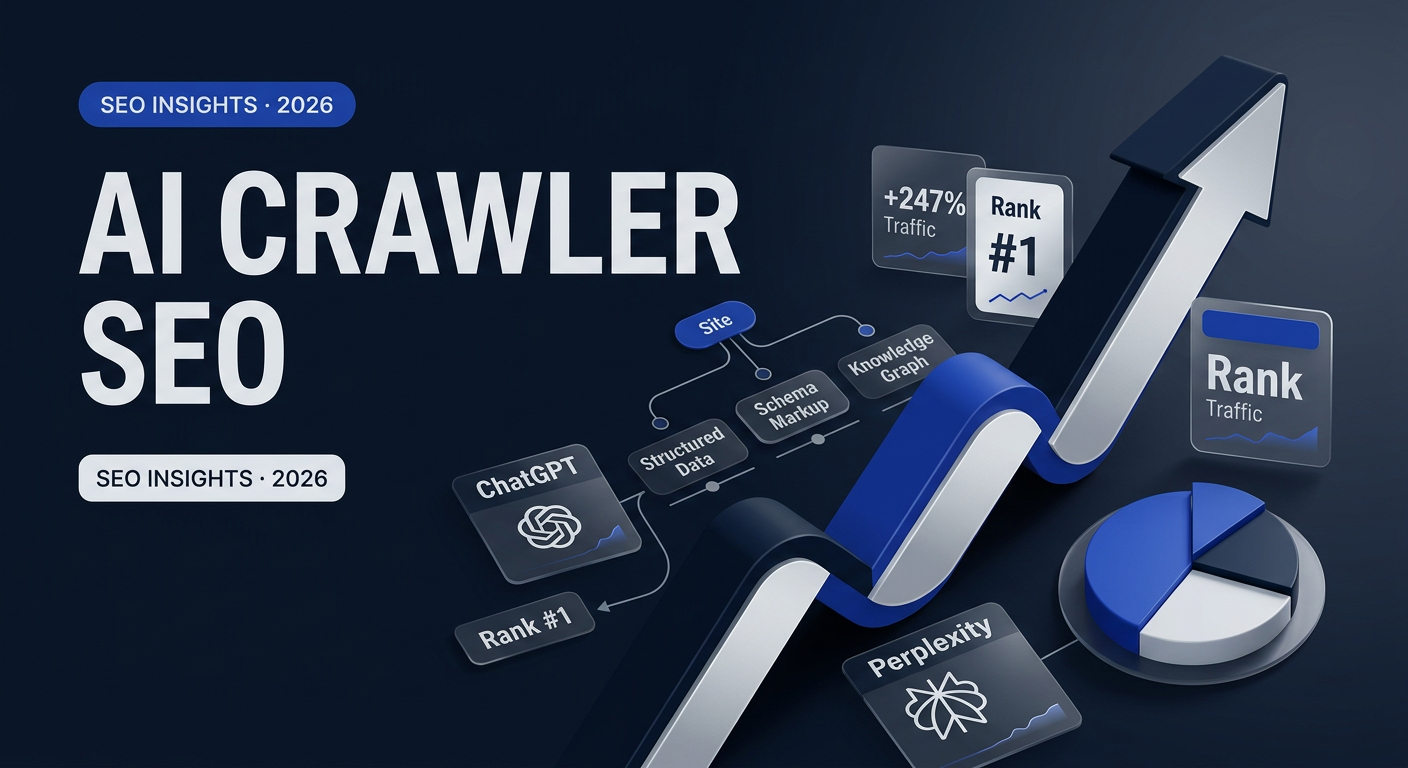
AI crawlers — GPTBot, PerplexityBot, ClaudeBot, Google-Extended, and the growing zoo of others — read your site with different priorities than Googlebot. They optimize for extractability, entity clarity, and factual density. Here is how to structure your site so AI answer engines choose you as the source they cite.
Understand what AI crawlers actually want
AI crawlers do two things: (1) build training datasets that shape how future models describe your industry, and (2) fetch real-time content to answer live user queries. Both reward the same things — content that can be extracted as a self-contained, factually dense, structurally clear answer. If a paragraph makes sense pulled out of context, an AI can quote it. If it requires surrounding scaffolding to understand, an AI will skip it.
Decide your AI crawler policy
You have three choices per crawler: allow, block, or paywall. Blocking GPTBot in robots.txt prevents OpenAI from training on your content but also excludes you from real-time ChatGPT browse citations. Most brands should allow major AI crawlers (GPTBot, PerplexityBot, ClaudeBot, Google-Extended) — visibility in AI answers is now a growth channel. Selectively block only if you have a licensing reason.
Publish an llms.txt file
The llms.txt convention places a markdown-formatted summary at yourdomain.com/llms.txt. It should include your brand, value proposition, and a curated list of your most important pages with 1-2 line descriptions. Think of it as a hand-picked table of contents for LLMs. Increasingly respected by Perplexity, Anthropic, and emerging AI search products. Low effort, meaningful upside.
Use semantic HTML aggressively
AI crawlers parse structural HTML with the same care Googlebot parses schema. Use <article>, <section>, <nav>, <aside>, <time>, <figure>, and proper heading hierarchy. Avoid <div>-only markup. A well-structured HTML5 document tells an AI what is content vs chrome vs navigation.
Ship the schema AI models look for
Prioritize: Article with author, datePublished, dateModified, publisher, and headline. Organization sitewide with sameAs linking to every official brand profile (LinkedIn, X, GitHub, Wikipedia). FAQPage on any article with Q&A sections. HowTo for step-by-step content. Product with aggregateRating for commerce. Schema is how you speak to AI crawlers in a language optimized for structured extraction.
Write for extractability
Every important claim should stand alone. Instead of "we saw significant improvements as detailed above," write "our clients saw a 47% average increase in organic traffic within 90 days." Include units, dates, and named entities. Use active voice. Keep sentences under 25 words. LLMs prefer these because they extract cleanly into quoted context.
Consistent entity signals across the web
AI models build a probabilistic understanding of your brand from every mention across the training data. Make it easy: use the exact same brand name everywhere, link to your own official profiles from your site, get listed in Wikipedia if genuinely notable, publish an About page with a clear one-sentence description that other sites can quote, and maintain a Crunchbase or LinkedIn company profile with matching details.
Freshness signals AI crawlers reward
AI answer engines prefer content that shows recency. Update dateModified in your schema when you meaningfully revise a page. Include "Last updated" text visible on the page. Cite recent sources. Refresh statistics annually. A 2024-dated article on a 2026 topic will lose to a 2026-dated equivalent, even if the older one has more backlinks.
Make your API and data discoverable
If you have public data, structured documentation, or an API, expose an OpenAPI spec, publish clean JSON endpoints, and reference them in your llms.txt. Some AI agents can already consume APIs directly when answering user tasks. Being the API an agent picks means being the tool a user uses.
Monitor which AI crawlers actually visit
Log user agents. You should see GPTBot, PerplexityBot, ClaudeBot, Google-Extended, Amazonbot, Bytespider, and others. If a crawler you want to be visible in is not visiting, check robots.txt, check for CDN blocking (Cloudflare's default AI bot blocking is aggressive), and confirm your sitemap is discoverable. Being visible to AI crawlers is the prerequisite to being cited by them.
Wrapping up
AI-first site structure is not a rewrite — it is a discipline. Semantic HTML, aggressive schema, clean entity signals, freshness, and permissive crawling policies. Do these well and you become one of the sources every AI answer engine trusts. Skip them and you become invisible in the fastest-growing discovery layer on the internet.